
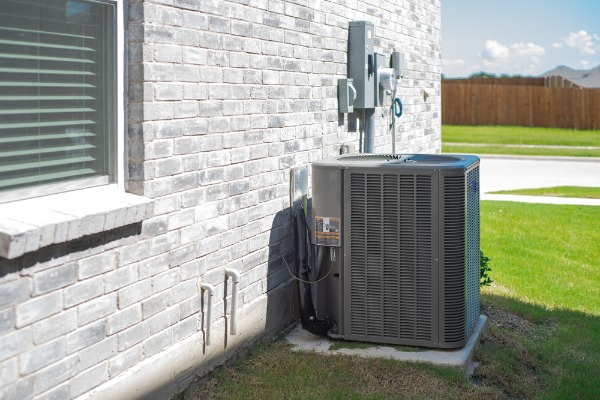
The finished basement that's freezing in January. The addition that's a sauna in July. The garage conversion office where the furnace's distant wheeze never arrives. Aurora is full of rooms the original duct system wasn't designed for — and extending ducts to them is often expensive, ugly, or both. That's the mini-split's home turf. The complete guide: what they cost, how they heat in winter, and when they beat ductwork.
On this page
Why mini-splits fit Aurora's problem rooms
80011's ranches were designed with one thermal zone: the main floor. Then homeowners finished basements, enclosed patios, and converted garages — spaces the furnace and its ducts never accounted for. Extending ductwork to a basement means soffits, lost ceiling height, and a system that was sized for the original square footage now stretched thin.
A ductless mini-split sidesteps all of it: an outdoor unit plus one or more wall-mounted (or ceiling-cassette) indoor heads, connected by a small refrigerant lineset through a 3-inch wall penetration. No ducts, no remodeling, heating and cooling from one system, each head independently controlled. The basement gets its own thermostat for the first time in the house's life.
But do they heat in a Colorado winter?
Yes — modern cold-climate mini-splits are heat pumps rated for sub-zero operation, and they're actually ideal basement heaters: basements need steady, gentle heat, which is exactly what an inverter-driven mini-split delivers. A basement head will carry the space through the vast majority of winter hours.
The honest caveat: on the coldest nights (sub-zero stretches), a single head in a large basement may need help — which is why we size conservatively and discuss supplemental options for extreme cold. For additions and bonus rooms above grade, the same logic as our heat-pump post applies: properly sized, they're the primary heat, not a novelty.
What they cost in Aurora (2026)
- Single-zone (one head): [TBD] installed — the classic basement or addition solution.
- Multi-zone (2–4 heads, one outdoor unit): [TBD] depending on head count and line lengths.
- Ceiling cassette vs. wall mount: cassettes cost more (and look better in finished spaces); wall heads are the value pick.
Compare against extending ductwork: new duct runs, system rebalancing, and often a larger furnace to handle the added load — duct extensions routinely exceed the mini-split cost while delivering worse zone control. The mini-split usually wins on both price and performance for problem rooms.
Sizing and placement (where DIY planning goes wrong)
Two mistakes we see constantly: oversizing (“bigger is better” — it's not; oversized heads short-cycle and don't dehumidify) and bad placement (head blasting directly onto the couch, or tucked where airflow can't circulate). Rules of thumb:
- Size by load calculation for the room, not the house. Basements need less than you'd think (earth insulation helps); sun-facing additions need more.
- Mount high on an interior wall when possible, with clear throw across the room.
- One head per truly separate space — a head in the basement rec room doesn't heat the basement bedroom with the door closed.
- Keep the outdoor unit accessible for service and clear of snowdrift zones.
Mini-split vs. the alternatives
Vs. space heaters: not a contest. Space heaters are expensive to run, a fire risk, and heat one spot. A mini-split heats the whole room at 1/3 the operating cost.
Vs. extending the furnace ducts: mini-split wins on zone control and usually on cost, as above. Duct extension only wins when the existing system is oversized and the run is short.
Vs. window AC + space heater combo: the renter's special. Noisy, inefficient, insecure (window units), and ugly. The mini-split is the grown-up version — quiet, efficient, permanent, and it adds home value instead of subtracting curb appeal.
Maintenance: don't skip it
Mini-splits need the filter rinse monthly (two minutes, designed for it) and a professional deep clean every 12–18 months — see our cleaning cost guide. Neglected heads grow mold on the blower wheel, lose airflow, and smell like a pond. The maintenance is simple; skipping it is the #1 reason mini-splits get a bad reputation they don't deserve.
Installation day: what to expect
A single-zone mini-split install is a one-day project, and a tidy one:
- Morning: outdoor unit placed on a pad or wall brackets, positioned for airflow and service access. Indoor head mounted — one 3-inch penetration through the wall for the lineset, condensate drain, and wiring.
- Midday: lineset run (usually along the exterior in a slim cover that looks like a downspout — paintable), electrical wired to a dedicated circuit, condensate routed to a drain or exterior.
- Afternoon: system evacuated (vacuum-pulled to remove moisture — this step is what separates pro installs from failures), refrigerant released and charge verified, full test in heating and cooling modes.
Disruption: minimal. No drywall work in most installs, no ducts, no mess beyond the mounting area. You'll have heating and cooling in the room by dinner. Multi-zone adds a day. The most common surprise is how undramatic it is — which is exactly what you want from a contractor in your home.
Got a room the furnace forgot?
Free mini-split assessment: room load calc, head placement plan, and installed pricing — single or multi-zone.
Frequently asked questions
Can one outdoor unit run multiple rooms?
Yes — multi-zone systems run 2–5 indoor heads off one outdoor unit, each with its own thermostat. It's the clean answer for a basement + addition + bonus room in one project.
How loud are the indoor heads?
Whisper-quiet — typically 19–30 decibels on low, quieter than a library. The outdoor unit is quieter than a central AC condenser too. Noise complaints about mini-splits are almost always about bad placement, not the equipment.
Do I need a permit for a mini-split install in Aurora?
Yes — mechanical and electrical permits, which we pull. The install also needs a proper refrigerant evacuation and charge; the “pre-charged DIY” kits skip steps that matter for longevity.
Will a mini-split raise my home's value?
A professionally installed system in a finished basement or addition generally appraises as a real improvement — unlike window units, which appraisers ignore. It's permanent, permitted HVAC.
Can mini-splits cool a whole house?
A multi-zone system can, and some smaller homes run entirely on them — but for a typical 80011 ranch with existing ducts and a furnace, the sweet spot is targeted: problem rooms on mini-splits, main house on the central system.
Will the outdoor unit survive an Aurora winter?
Yes — it's engineered for it, defrost cycle included. Keep it clear of snowdrifts (12+ inches of clearance), don't pile snow against it, and it'll heat through the coldest week.
The bottom line: the room your furnace forgot doesn't need a bigger furnace — it needs its own system. A mini-split gives the basement or addition independent heating and cooling, installed in a day, for less than extending ductwork, with zone control ducts can't match. Size it right, keep the filters rinsed, and the coldest room in the house becomes the most comfortable one.
PROUDLY SERVING AURORA, CO 80011