
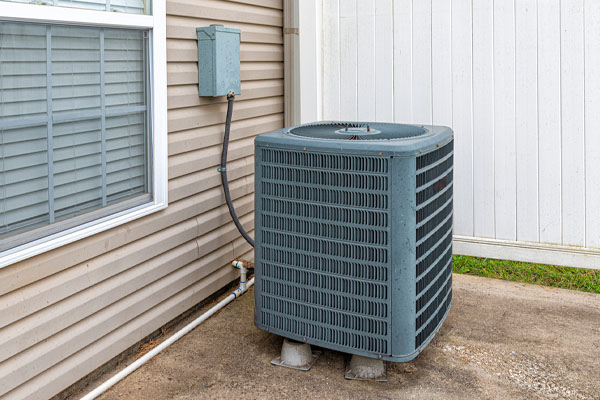
“Do heat pumps actually work when it's 10 degrees?” It's the question that kills half of heat-pump conversations in Colorado — asked with the skepticism of someone burned by 1990s heat-pump lore. Fair. The old ones didn't. The new cold-climate ones are a different machine entirely. Here's what they actually do in an Aurora winter, where they still need help, and the honest math on heat pump vs. furnace.
On this page
What “cold-climate” actually means
A heat pump moves heat rather than making it — in winter, it extracts heat from outdoor air and pumps it inside. Old heat pumps gave up around 35–40°F and switched to expensive electric backup. Modern cold-climate heat pumps (inverter-driven, variable-speed compressors) are rated to produce useful heat down to -13°F or lower, with capacity that degrades gradually rather than cliff-diving.
Aurora's design temperature — the coldest it realistically gets — is around 0–5°F. A properly sized cold-climate heat pump handles the vast majority of winter hours on its own. The handful of sub-zero nights are what backup heat is for, which brings us to...
Backup heat: the part everyone misunderstands
Every cold-climate heat pump install in Colorado includes backup/auxiliary heat — usually electric heat strips, sometimes a gas furnace in a “dual-fuel” setup. Backup isn't failure; it's engineering. The heat pump does 90%+ of the winter efficiently, and backup covers the extreme tail.
Dual-fuel (heat pump + gas furnace) is the premium Aurora setup: the heat pump runs until outdoor temps drop below its economic balance point (often ~25–35°F depending on gas/electric rates), then the gas furnace takes over. You get heat-pump efficiency in mild cold and gas power in deep cold. Higher install cost, lowest operating cost, maximum comfort.
Operating cost vs. a gas furnace in Aurora
The honest math depends on your electric vs. gas rates, which shift yearly — so here's the framework, not a fake fixed number. A heat pump delivers 2–4 units of heat per unit of electricity (COP of 2–4, higher in mild weather). A gas furnace delivers ~0.96 units per unit of gas energy. Multiply through by your actual per-unit rates:
- With cheap Colorado natural gas, a high-efficiency gas furnace is often still cheaper per BTU in deep winter.
- In shoulder seasons (October, April — half the heating year), the heat pump usually wins on operating cost.
- Dual-fuel gets the best of both by switching at the economic crossover automatically.
Anyone quoting you a single “saves $X/year” number without your rate structure is guessing. We'll run your actual rates through the comparison when we quote.
When a heat pump beats a furnace in Aurora
Heat pump wins: all-electric homes (no gas line — common in some newer builds and additions), homes adding cooling where the heat pump does both jobs in one unit, solar-panel owners (your own cheap electricity changes all the math), and anyone replacing both furnace and AC anyway — one heat pump can replace both.
Gas furnace wins: existing cheap natural gas service, drafty older homes where the furnace's raw output matters on design days, and tight budgets — a quality furnace replacement costs less upfront than a cold-climate heat pump system.
Three myths, retired
“Heat pumps don't work below freezing.” 1995 called; it wants its heat pump back. Modern units are rated below zero.
“The backup heat runs constantly and the bills explode.” Only if it's mis-sized or mis-configured — which is an installer problem, not a heat-pump problem. Properly set up, backup runs a handful of nights a year.
“They blow cold air.” Heat-pump supply air (90–110°F) feels cooler than furnace air (120–140°F) but it's still warmer than room temp. Longer, gentler cycles — different feel, not worse heating.
Installation realities in existing Aurora homes
A heat pump isn't a drop-in swap — here's what the install actually involves in a typical 80011 ranch:
- Electrical: heat pumps need a dedicated 220V circuit like AC, plus capacity for backup heat strips (which draw serious amps). Older panels sometimes need upgrades — we check this in the assessment, not mid-install.
- Outdoor unit placement: needs clear airflow and defrost drainage — the unit melts frost off its coil all winter, and that water has to go somewhere that isn't your walkway (ice slick) or foundation.
- Ductwork compatibility: heat pumps move more air at lower temperatures than furnaces, so duct sizing and airflow matter more, not less. Undersized ducts that “worked fine” with a furnace can strangle a heat pump. Static-pressure testing during the quote catches this.
- Thermostat: heat pumps need thermostats that understand auxiliary heat staging — a furnace thermostat will short-cycle the backup and erase the efficiency gains. The right control is part of the quote, not an afterthought.
None of this is a dealbreaker — it's just why the assessment takes 45 minutes and the quote is itemized. The companies quoting heat pumps sight-unseen are the ones whose installs become cautionary tales.
Curious what a heat pump would do for your house?
Load calculation, rate-based operating-cost comparison, and dual-fuel vs. straight heat pump options — in writing.
Frequently asked questions
Can a heat pump replace both my furnace and AC?
Yes — that's its superpower. One outdoor unit plus indoor air handler (or ducted coil) handles heating and cooling. If both your furnace and AC are aging, price the heat pump against replacing both.
Do heat pumps need special maintenance?
Annual service like any system — coil cleaning, refrigerant check, electrical, defrost-cycle verification. The defrost check matters in Colorado: it's what keeps the outdoor coil ice-free in winter.
What happens in a power outage?
Same as any electric-dependent system: no heat without power. Gas furnaces need electricity too (blower, controls), so this isn't a heat-pump-specific weakness — but it's worth knowing no modern heating works in a blackout.
Are there rebates for heat pumps in Colorado?
Federal tax credits and occasional utility rebates apply to qualifying cold-climate models and change by year. We'll itemize every current incentive in your written quote.
How loud is the outdoor unit in winter?
About as loud as a central AC condenser — 50–60 decibels, a quiet conversation. Defrost cycles are briefly louder (you'll hear the reversing valve whoosh). Placement away from bedroom windows solves most complaints.
Do heat pumps work with my existing ductwork?
Usually yes, but airflow matters more for heat pumps than furnaces — they move larger volumes of cooler air. We test static pressure during the assessment; undersized or leaky ducts get flagged and quoted for correction before the install, not discovered after.
The bottom line: yes, cold-climate heat pumps genuinely work in Aurora winters — the technology crossed that line years ago. Whether one beats a gas furnace for your house depends on your rates, your ducts, and your plans, and that's a calculation, not a slogan. Get the load calc and the rate-based comparison in writing, and decide on numbers.
PROUDLY SERVING AURORA, CO 80011