
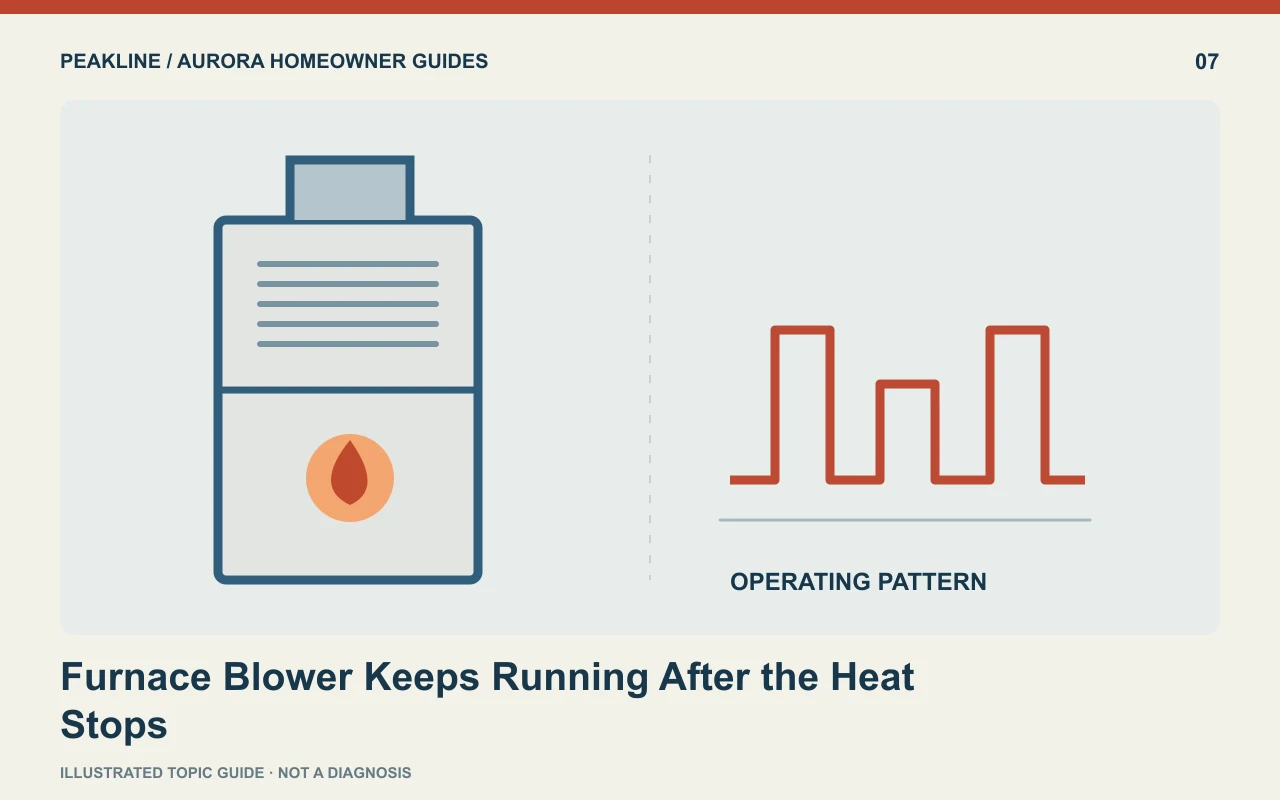
Describe heat output and fan operation separately
A blower can run at a different point in the sequence from the heating components. Record whether the thermostat is still requesting heat, whether the fan setting is continuous and whether the room temperature has reached the setpoint. Note how long the pattern continues without repeatedly changing controls. This distinction helps the technician determine whether the complaint is about expected control behavior or a fault needing investigation.
A changed pattern deserves context
Tell the provider if the fan previously stopped and now does not, or if this began after thermostat installation, a repair or a power interruption. Mention any visible status message and whether the air ever becomes warm during a heat call. Do not disconnect thermostat wires or jump terminals to test a theory. A wiring change based on an online example may not match the installed equipment.
Ask for the control explanation
The provider should explain how the installed thermostat and furnace are intended to operate and what finding supports any repair. If a setting is adjusted, ask for the reason and a demonstration of the resulting sequence. If a part is replaced, ask how the repair will be verified. Keep the final control settings so future service does not begin with an undocumented configuration.
Prepare a useful service history
Keep the symptom timeline, earlier repair invoices and equipment information together. Record what changed before the concern began and which normal settings were in use. Give the provider the observation rather than only the part you found in a search result. If a location or component cannot be inspected safely, explain that limitation instead of trying to obtain a closer photograph. The actual system and the manufacturer’s instructions should guide the assessment.
Ask what will verify the work
Before authorizing work, request the identified finding, proposed action, complete charges and important exclusions. Ask how the provider will check the result and what information you will receive afterward. If an intermittent issue cannot be reproduced, keep the limitations and follow-up plan in writing. Confirm current availability, diagnostic fees and the actual provider’s identity directly. This website does not establish a diagnosis, binding price or guaranteed repair outcome.
Explore the service behind the question
Read the furnace repair guide and compare the complete written scope before arranging work. Confirm the provider’s identity, fees and availability for your property.
ENERGY STAR: choosing a heating and cooling contractor · DOE: proper sizing of HVAC systems
General resources do not establish the diagnosis, price or suitability of equipment at your home.