
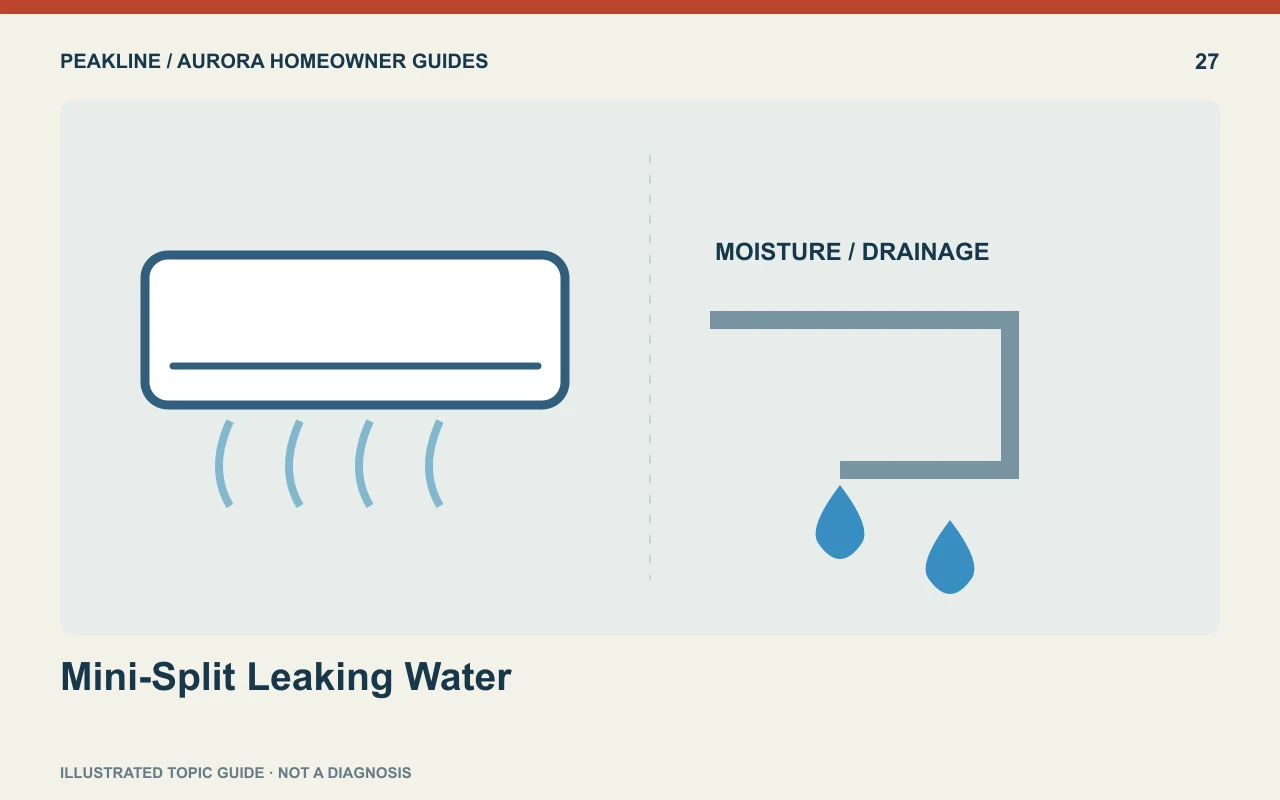
Describe the first visible water
Note whether water comes from the indoor unit, a wall route or another location and whether the issue occurs during cooling or after shutdown. A stain can appear away from the original source. Photograph the visible location safely and mention any earlier cleaning, drain work or installation changes. Do not climb on unstable furniture or remove the housing to trace a hidden drain.
Do not assume that every leak is a simple blockage
The arrangement may include a drain route, a pump or other components that need assessment in context. Avoid inserting tools or chemicals into unfamiliar tubing or trying to change the unit’s position. Water near electrical equipment requires care and professional attention. Follow the manufacturer’s user guidance and tell the provider about the affected area and access before the visit.
Ask how drainage will be verified
The report should identify the source supported by inspection and explain what was cleaned, adjusted or replaced. If a pump or control is involved, ask how its operation was checked. Confirm whether repairs to wall finishes are part of a separate scope. Keep photographs and the completion report so any repeat leak can be compared with the original route rather than dismissed as a new isolated drip.
Prepare a useful service history
Keep the symptom timeline, earlier repair invoices and equipment information together. Record what changed before the concern began and which normal settings were in use. Give the provider the observation rather than only the part you found in a search result. If a location or component cannot be inspected safely, explain that limitation instead of trying to obtain a closer photograph. The actual system and the manufacturer’s instructions should guide the assessment.
Ask what will verify the work
Before authorizing work, request the identified finding, proposed action, complete charges and important exclusions. Ask how the provider will check the result and what information you will receive afterward. If an intermittent issue cannot be reproduced, keep the limitations and follow-up plan in writing. Confirm current availability, diagnostic fees and the actual provider’s identity directly. This website does not establish a diagnosis, binding price or guaranteed repair outcome.
Explore the service behind the question
Read the mini-split services guide and compare the complete written scope before arranging work. Confirm the provider’s identity, fees and availability for your property.
ENERGY STAR: choosing a heating and cooling contractor · DOE: proper sizing of HVAC systems
General resources do not establish the diagnosis, price or suitability of equipment at your home.